Disclaimer: This page may contain affiliate links and I may get a small commission if you decide to make a purchase through my links, at no additional cost to you. Please read my Private Policy for more information. Thank you!
Planning a Japan 3-week itinerary can be exciting, but also a bit overwhelming.
There’s so much to see and do, and figuring out the best route, how many days to spend in each place, and where to stay can quickly turn into a giant puzzle.
Like should you go to Hakone? Or Hiroshima instead? Or should you just explore Kansai for all 21 days?
Before my first trip to Japan, I spent hours researching itineraries, comparing cities, and trying to decide what was worth the time.
I wanted to see the highlights without rushing, keep things within a mid-range budget, and make sure the route made sense, and most importantly, not needing to wake up at 5am every single day.
And in this post, I’m sharing the exact 3-week itinerary I followed on my solo trip.
It’s perfect for first-time travelers or anyone planning 3 weeks in Japan without the JR Pass, especially if you’re looking for a mix of cities, nature, small towns, and local experiences.
I’ve also included where I stayed, how I got around, what I did in each place, and honest tips from what I learned along the way.
You’ll find:
- A detailed day-by-day route from Tokyo to Mt. Fuji, Kyoto, Osaka, Kanazawa, Takayama, Hirayu Onsen, Matsumoto, and back to Tokyo
- Transportation tips without a JR Pass
- Personal recommendations and small things that made a big difference
- Hotels and activities I actually used (and would use again)
So if you’re planning something similar, I hope this post helps!
Overview of My 3 Week Japan Itinerary for First Timers
Here’s a quick look at the route I followed during my 3 weeks in Japan:
- Days 1–3: Tokyo
- Days 4–5: Mount Fuji
- Days 6–9: Kyoto (Day trip: Uji)
- Days 10–12: Osaka (Day trip: Arima Onsen)
- Days 13–14: Kanazawa
- Days 15–16: Takayama (Day trip: Shirakawago)
- Days 17–18: Hirayu Onsen (Day trip: Shinhotakata Ropeway)
- Days 19–20: Matsumoto (Day trip: Narai-juku)
- Day 21-22: Back to Tokyo & Leave Japan
I spent anywhere from 1 to 3 nights in each place, with a few day trips added in along the way, like Arima Onsen, Uji, Shirakawago, Shinhotaka Ropeway, and Narai-juku.
The mix of big cities, small towns, and onsen stops helped keep the trip balanced, and the pacing felt just right. The 3 weeks in Japan route flowed smoothly without any backtracking, which made travel days easier and more efficient.
You can follow this exact route or adjust the number of nights depending on your own travel style!
Week 1 – Tokyo, Mount Fuji & Kyoto
Days 1–3: Tokyo
Since my flight touched down in Tokyo, it naturally made sense to make it my first stop on this 3-week Japan itinerary.
I gave myself three days here, which was just enough to get a taste of its neighborhoods, food, and some iconic spots without trying to see it all.
✅ What I Did In Tokyo:
Explored Shibuya and Harajuku
I started with the classics: Shibuya Crossing, Takeshita Street, and Omotesando. These places are great for people-watching, taking in Tokyo’s chaotic energy, and grabbing weird souvenirs.
I actually walked across Shibuya Crossing several times; not to film endless reels, but because there’s something oddly thrilling about walking through one of the world’s busiest intersections with hundreds of strangers!
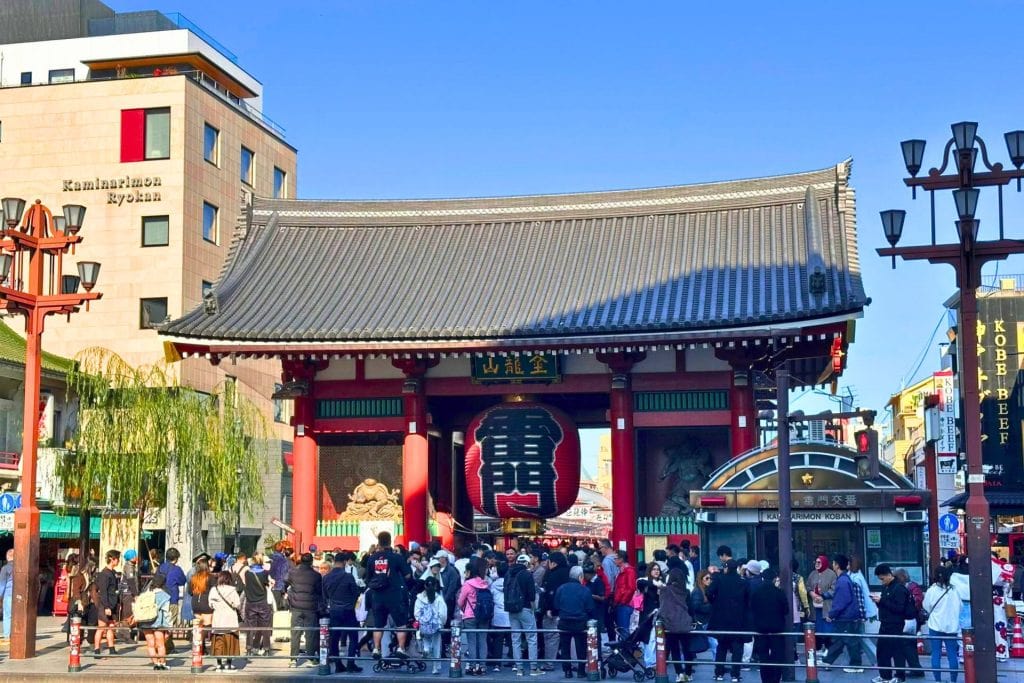
Asakusa & Sensoji Temple
Very touristy but still worth it. I also visited after sunset; the pagoda was beautifully lit up at night, and the whole area felt completely different from the daytime crowds.

Chilled out at Shinjuku Gyoen National Garden
I went at the end of fall, and there were still pops of autumn colors. The lakes, little bridges, and bonsai trees made it feel like I wasn’t in the city at all. It was such a peaceful break from the crowds. 🙂
Watched autumn foliage at Meiji Jingu Gaien Gingko Avenue
I went just before sunset and the view was stunning. Both locals and tourists were gathered under the golden gingko trees, snapping photos and holding the leaves in one hand. I also strolled through the nearby Jingu Gaien Ginkgo Festival, picked up a few souvenirs, and grabbed some takoyaki balls for dinner!


Visited Akihabara
Even if you’re not into anime or manga, this area is fascinating. I browsed tech stores, capsule toys, and ended the day with a satisfying curry rice dinner.
Joined a sushi-making class
I signed up for a small-group session in a cozy sushi bar, but ended up having a private class since I was the only one in the morning slot. It was hands-on, fun, and made me realize just how much skill goes into making sushi look that good.

✨Things I’d Do Next Time (or What You Might Want to Add)
I didn’t go to Tokyo Skytree or teamLab Planets this time since I figured I’d save them for a future visit when I have more time. If you’re into immersive art or city views, both seem worth checking out.
Warner Bros Studio Tour Tokyo is high on my list since I considered myself as 50% Potterheads!
I skipped it this time since they don’t allow tripods inside, and I’d rather not have an entire album of weird selfie angles and didn’t feel like awkwardly asking strangers for help (the struggle of solo travelers). So I’m saving it for when I’m finally not visiting Japan alone!
Travel tip: For popular attractions like Tokyo Skytree, teamLab, and the Warner Bros. Studio Tour Tokyo, the best time slots often sell out days (or even weeks) in advance. If you know you want to visit, it’s worth booking your tickets early online to save you from having to rearrange your plans or settle for less ideal timings.
Visit local markets & fairs
Looking for less touristy things to do while in Tokyo? Tokyo has plenty of flea markets happening during the weekends and some only take place a few times a year.
I went to Oedo Antique Market (the largest and oldest outdoor event in Japan) and hang out with the locals scouring for 200 yen second-hand kimono, vintage items, antique Japanese books, and more!
Visit Tsukiji Outer Market
Explore the local market that sells various fresh and processed seafood. You can also get the freshest sushi for breakfast here as the fish products are sent directly from Toyosu Market.


Where I Stayed in Tokyo:
I stayed in two places during my Tokyo visit; both affordable and within walking distance from the train stations.
- K’s House Tokyo Oasis was a great budget pickclose to Sensoji Temple, Sumida River, and Tokyo Skytree. If you’re looking for a quieter base with traditional vibes and good food nearby, Asakusa is a top choice.
- For my final night, I booked Rembrandt Cabin Shinjuku Shin-Okubo since it’s near the Shinjuku Expressway Bus Terminal (super handy if you’re catching the airport limousine bus). Plus, it’s just one stop from the action in Shinjuku!
Would I change anything?
Three nights in Tokyo felt just right for a first visit. It gave me time to explore without feeling rushed or crammed.
If I had one more day, I might’ve added a day trip to Hakone or Nikko for a change of scenery.
Or if theme parks are more of your thing, you can spend an entire day at Tokyo Disneyland or DisneySea.
Honestly, you could spend as much time as you want in Tokyo and still NOT run out of things to do. I’ve got a friend who once spent two full weeks here and had a blast just exploring different neighborhoods, cafes, and museums!

🎟️ Tokyo Tours I’m Saving for Next Time
These are some of the highly-rated, fun experiences I’ve bookmarked for a future trip:
- 🍢 Tokyo: Shinjuku Food Tour (13 Dishes at 4 Local Eateries) – Taste a variety of local dishes across four hidden eateries in Shinjuku.
- 🍜 Ramen & Gyoza Cooking Class in Tokyo with Local Supermarket Visit – Shop like a local and learn to make authentic ramen and gyoza from scratch in a hands-on cooking experience.
- 🏎️ Tokyo Street Go-Kart Tour with Costumes and Photoshoot – Drive a go-kart around Tokyo dressed as your favorite character — an unforgettable photo op!
- 🤼 Sumo Show & Cultural Experience in Tokyo – Watch a live sumo demonstration, learn the rituals, and snap photos with real wrestlers.
Days 4–5: Mount Fuji (Kawaguchiko)
After a busy few days in Tokyo, I wanted to slow things down a bit and enjoy some nature, which made Kawaguchiko a good next stop on my 3-week Japan travel route.
It’s one of the easiest towns to base yourself around Mount Fuji, with stunning views, chill vibes, and just enough to do without needing to hop around constantly.
I stayed for two nights and got super lucky: Fujisan was completely visible the entire time; no clouds, no fog, just a clear view of that iconic snow-capped cone!
✅ What I Did in Mount Fuji:
Cycled Around Lake Kawaguchiko
I rented a bike near my hotel and spent the day cycling around the lake, and stopped at a few scenic points and parks to soak in the lovely view. This was definitely one of my highlights during my trip!

Visited Oishi Park and Nagasaki Park
These two had the ultimate view combo: lake + Mount Fuji. I especially liked Nagasaki Park for its quieter vibe and the golden pampas grass added a soft, natural touch that made the whole view look even more breathtaking.
Strolled Through Maple Corridor
This spot is especially popular in fall, and even though most of the leaves had already fallen when I visited, the remaining autumn colours were still captivating. I could see why this spot gets so hyped during the fall season!
Climbed to Chureito Pagoda
Yes, it’s the spot with the red pagoda and Mount Fuji in the background. And yes, it really does live up to the hype. The 400 steps to the top were no joke, but the view was more than worth it.
Travel tip: I reached Chureito Pagoda around 2pm, and the sunlight was pretty harsh. If you’re hoping to get nicer photos and better visibility of Fujisan, I’d recommend going early in the morning instead; the light is softer, and the view is usually clearer.

Tried Hot Noodles
Thick, chewy flat noodles in a hearty miso broth with a pile of veggies was exactly what I needed after walking and biking all day! I had it at a small restaurant near my hotel, and it was a warm, super filling meal ideal for a cold night!
If you want a full breakdown of this part of the trip, I’ve written a separate 2-Day Mount Fuji Itinerary that goes into more detail with how to get around, renting a bike, and insider travel tips.
✨Things I’d Do Next Time (or What You Might Want to Add):
If you’ve got extra time in Kawaguchiko or want to swap in a few different spots, here are a couple of things I had on my list but didn’t manage to do this time:
Mt. Fuji Panoramic Ropeway
I skipped this because I wanted to spend more time cycling around the lake, but if you’reshort on time or visiting for just one day, it could be a quick way to catch that panoramic Fuji view from above.
Stay at a Fuji-View Onsen Ryokan
This time I stayed in a regular business hotel, but next time I’d love to book a ryokan with an open-air bath facing Mount Fuji. Soaking in an onsen while watching the mountain? Yes, please.
Lake Yamanakako
This lake is quieter and less touristy than Kawaguchiko, and it’s known for having swans just casually hanging out by the shore. I would’ve loved to spend a few hours here, especially on a clear day when Fuji is out!

Where I Stayed in Mount Fuji:
I based myself in Kawaguchiko, which I’d recommend for first-time travelers to Japan looking for the best place to stay near Mount Fuji without the stress of moving around too much.
It’s close to the train and bus stations, and it’s easy to find restaurants, bike rentals, and convenience stores nearby.
Also, if your Japan bucket list is to see Mount Fuji, staying at least one night in Kawaguchiko gives you a better chance of catching the view when the weather clears.
I stayed at Toyoko Inn Fujikawaguchiko, a clean and affordable business hotel near the lake.
The room was cozy and had everything that I needed for a good stay. Some of the rooms (including mine!) have Fuji views right from the window and waking up to that was pretty surreal. 🥹
Breakfast was surprisingly generous, with a good spread to start the day. I also appreciated the free shuttle service, which made getting to the station after checkout super easy!


Other places to stay at Mount Fuji:
When I come back to Mount Fuji, I’m 100% staying somewhere like Maruei!
Soaking in a private onsen with Fujisan right in front of me sounds like the ultimate dream, especially after a full day of walking or cycling.
If you’re still deciding, here are a few other places I had my eye on when planning this trip:
- Fuji Lake Hotel: great views and mid-range comfort
- Fujikawaguchiko Onsen Konanso: beautiful traditional ryokan with onsen and mountain views
Travel tip: It’s best to book any ryokan with Fuji views 3 to 6 months in advance, especially if you’re traveling during peak seasons like fall and spring. These rooms can sell out quickly, even with really steep prices. I checked some in October and they were already almost full by the time I decided.
Would I change anything?
Honestly, not much. Two days in Kawaguchiko was just nice; I got amazing clear views of Fujisan, biked around the lake, and explored the town at my own pace.
If I had one more day though, I might’ve added a side trip to the less crowded Lake Yamanakako to hang out with the wild swans or gone up the Mt. Fuji Panoramic Ropeway for another view from above.
That said, if you’re only planning a day trip to Mount Fuji from Tokyo, it’s totally doable. Just take the earliest highway bus and stick to a few highlights like Lake Kawaguchiko, Oishi Park, and Chureito Pagoda.
Then you could use the next day for another nearby Tokyo day trip, like Hakone or Nikko.

Days 6–9: Kyoto
Kyoto was one of the places I was most looking forward to, especially with the autumn colors in full swing.
I spent four days here and ended up visiting a mix of temples, parks, old neighborhoods and also to rest.
Some were iconic must-sees, while others I stumbled across and ended up loving just as much!
✅ What I Did in Kyoto:
Kiyomizudera Temple
I went during the day and came back again at night for the autumn illumination. It felt like two different places; the daytime crowds were intense, but at night, it was way more peaceful and magical. Watching the temple glow under the lights with fiery maple trees around it was one of the most memorable sights from my trip.


Chishakuin Temple
I discovered this quiet little temple on the way to Sanjusangendo and ended up spending more time here than I expected. The autumn colors were lovely and there was barely anyone around.
Sanjusangendo
This was one of the most striking temples I visited. The long wooden hall filled with 1001 golden Kannon statues felt surreal. I’m so glad I made it here!
Heian Jingu Shrine
The giant torii gate was hard to miss, but the real highlight was exploring the serene garden, soaking in the tranquil view. It was also where I got my first Goshuin book (which makes for a great souvenir from Kyoto!).
Nanzenji Temple, Philosopher’s Path & Ginkakuji
I started my morning at Nanzenji Temple, then walked the Philosopher’s Path toward Ginkakuji. The route was peaceful and scenic, with late-season foliage still hanging on.
Eikando Temple
Super crowded but absolutely stunning during fall. The maple trees were glowing red and orange; definitely one of the most photogenic spots I saw in Kyoto!
Gion District & Pontocho Alley
Gion had moody wooden alleys and quiet charm, while Pontocho buzzed with lantern light and lively little restaurants. Both were great spots for evening walks with completely different vibes!


✨Things I’d Do Next Time (or What You Might Want to Add):
Fushimi Inari Shrine
I visited this on a previous trip, but I’d consider going again early in the morning next time. It can get crowded fast, so if you’re kinda late and still want the empty torii gate photos, just walk further up the trail.
Travel tip: If you’re visiting after rain or during the rainy season, wear shoes with a good grip. I once slipped on the trail in summer and hurt my knee. It was nothing serious but it did mess with my plans for a few days. The path can get slick, so be extra careful if it’s wet.
Tofukuji Temple
I’ve heard this place looks amazing during peak foliage or sunrise. It’s close to Fushimi Inari, so it might be an easy add-on if the timing works out next time!
Nishiki Market
I went on a past trip, so I skipped it this time. But if you’ve never been, it’s a fun place to explore and try the local delicacies.


Otagi Nenbutsuji Temple
Didn’t make it here this time, but it’s been on my list for a while. It’s tucked away in Arashiyama and known for its hundreds of quirky stone statues with different facial expressions. A slightly off beat spot in Kyoto if you want something less conventional.
A Tea Ceremony Experience
I came across a few highly rated tea ceremonies you can book in advance. Some are held in traditional tea houses around Gion or near the Philosopher’s Path. I would love to join one next time to learn more about the ritual and enjoy a quiet moment in between sightseeing!
🎟️ Kyoto Tours I Would 100% Book Next Time
After comparing way too many options, these are the top Kyoto activities that genuinely felt worth signing up for:
🍡 Kyoto Wagashi Cooking Class: This is one of those slow, hands on experiences that makes you appreciate Japanese culture on a deeper level. You get to make beautiful traditional sweets and finally understand why wagashi looks the way it does!
🍢 Kyoto Night Foodie Tour: Kyoto food spots can be hit or miss if you are guessing. This takes you straight to places locals actually eat, so you can relax, eat well, and stop overthinking every menu.
🌊 Amanohashidate & Ine Funaya Sightseeing Full Day Trip: This is one of those places that looks unreal in photos and somehow even better in real life. The route is a pain to plan alone, so doing it as a guided day trip just makes sense.
💃 Kyoto Geisha Show: If you are curious about geisha culture but do not want to awkwardly lurk around Gion, this is the right way to experience it. You get context, performances, and a much better understanding of what you are actually seeing!
Optional Day Trips from Kyoto:
If you have extra time in your itinerary or want to swap in something a little more relaxed, here are a few day trip ideas from Kyoto:
- Day Trip to Uji
I did a day trip to Uji and absolutely loved it!
Just 30 minutes by train, it had a peaceful vibe and fewer crowds than central Kyoto.
I visited Byodoin Temple (yup, the one on the ¥10 coin), strolled around Ujikami Shrine and Koshoji Temple, then ended the afternoon with soba and a matcha parfait at Itoh Kyuemon.
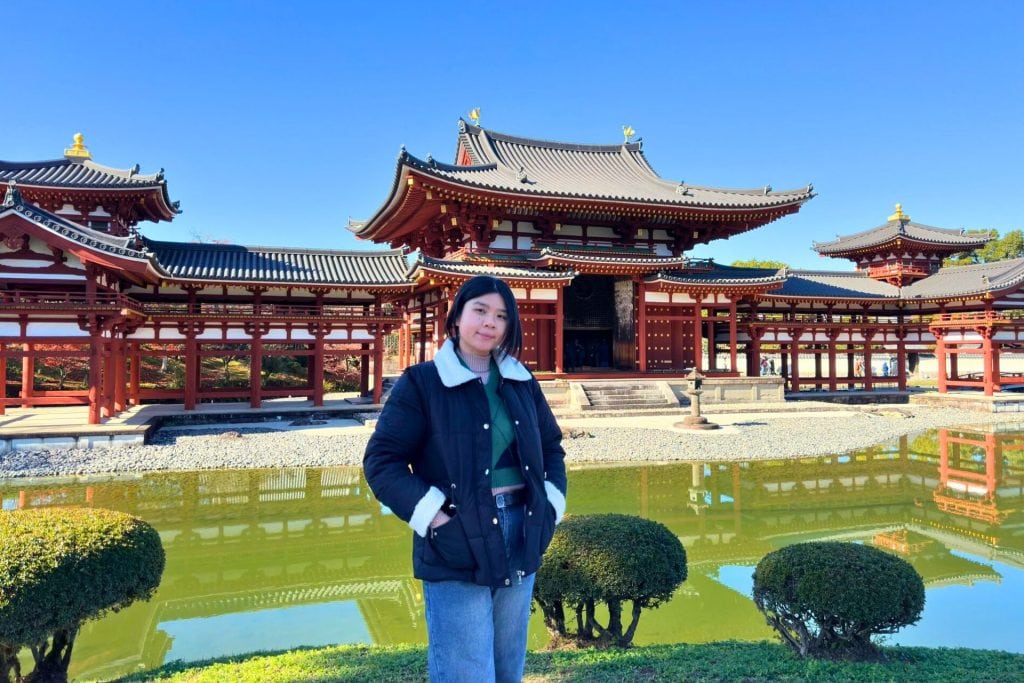

Uji is small enough to explore on foot, which made the whole day feel super relaxed.
Travel tip: If you want to go inside the Phoenix Hall at Byodoin Temple, buy the timed-entry ticket as soon as you enter the grounds. It’s an extra ¥300 ($2), but totally worth it. I didn’t realize this at first and walked around the gardens instead, and by the time I got to the ticket booth, I had to wait over an hour for the next available slot.
Even though the Phoenix Hall tour was all in Japanese and photo taking was not allowed, I still found it fascinating. It’s one of the few original Heian-era buildings still standing and seeing it up close was way cooler than just admiring it from across the pond!
- Arashiyama
A popular district on the western edge of Kyoto, Arashiyama is best known for its bamboo grove, scenic river views, and Tenryu-ji Temple.
Visitors often take a stroll across Togetsukyo Bridge, explore Iwatayama Monkey Park, or enjoy a peaceful boat ride down the Hozugawa River.

It’s especially stunning in the fall when the hills are blanketed in red and orange foliage!
Travel tip: You can skip the super-crowded Arashiyama Bamboo Grove and opt for Kodaiji Temple’s instead. Way less people but equally stunning bamboo scenery!
- Nara
Famous for its friendly deer and Japan’s largest bronze Buddha statue, Nara is a classic day trip from Kyoto, about 45 minutes by train.
Most visitors explore Nara Park, Todaiji Temple, and Kasuga Taisha Shrine, which are all within walking distance of each other.
It’s great for a slower-paced day with lots of open space and historic architecture!
Where I Stayed in Kyoto:
If it’s your first time in Kyoto and you plan to explore on foot, I’d recommend staying around Higashiyama or Kawaramachi.
I’ve stayed in both Sakyo-ku and Higashiyama, and definitely preferred Higashiyama.
It is more central and I could walk to places like Kiyomizudera and Sanjusangendo in under 10 minutes.
I stayed at Soi Guesthouse in Higashiyama and really enjoyed my time there. The hosts, Mr & Mrs Sim, were kind and even shared a local map, pointing out spots to catch the best autumn foliage!


They also provided a simple breakfast each morning (yogurt, bread, and fruit), which added to the homey feel.
Bonus: I could even see the night illumination of part of the Kiyomizudera Temple from the rooftop!
That said, the guesthouse is located on a steep slope, so if you’re carrying multiple suitcases or heavier luggage, just know that it’s a bit of a climb.
Other places I considered in Kyoto:
Here are a few other spots I looked into while planning this trip:
- Hotel Resol Kyoto Kawaramachi Sanjo: Clean, central, and walking distance to Pontocho Alley
- Sora Niwa Terrace Kyoto: Mid-range boutique hotel with a rooftop onsen
- Kyomachiya Ryokan Sakura Urushitei: A charming ryokan-style stay with tatami rooms and a cozy vibe.
I had it saved as a backup option and would absolutely consider it next time, especially if you’re looking for that classic Kyoto feel without a huge splurge.
Each of these is located in well-connected areas, so they’re great bases for sightseeing if you don’t want to stay in Higashiyama.
If you’re still deciding, I’ve shared more about the best areas to base yourself and what I liked (and didn’t) about these hotels in my best hotels in Kyoto guide.
Would I change anything?
Not really. I had initially planned to explore Arashiyama on Day 8, but I ended up spending half the day just hanging out at the guesthouse, enjoying the view from the window.
And frankly? I have no regrets.
The thing is, you don’t need to be out and about every single day in Japan.
Sometimes, a slow day to recharge is exactly what you need, especially on a long 3-week itinerary like this one. It helped me feel more refreshed for the next stretch of the trip.

I also met another solo traveler from Malaysia (Hello, Grace!) who was staying at the same guesthouse.
She had 13 days in Japan and spent 10 of them in Kyoto! During that time, she also did day trips to Arashiyama, Nara, and Uji.
Partly thanks to her sharing, I chose Uji for my own day trip and I ended up having such a fun time there.
And if you’re wondering what her second favorite was… it’s Nara.
You’re welcome! 😉
Week 2 – Osaka, Kanazawa & Takayama
Week 2 of this Japan travel itinerary 21 days was a mix of city buzz, a bit of nature, and lots of good food. I started in Osaka (cue the neon signs and endless takoyaki), then made my way to Kanazawa for a slower pace and lovely gardens.
Takayama came next; I expected it to be quiet, but it was way more crowded than I remembered from two years ago. Still fun to explore, just not the peaceful little town I had in mind!
Days 10–12: Osaka
To me, Osaka feels like the middle child, with Tokyo as the bold older sibling and Kyoto the graceful youngest.
It’s got the neon energy and big city vibes, but once you settle in, it feels more laid-back and easygoing.
This was my second visit, so I revisited a few familiar spots, spent a day at Universal Studios Japan (USJ) and added a day trip to Arima Onsen.
✅ What I Did in Osaka:
Universal Studios Japan (USJ)
I spent a day here and had a blast. I wandered through Hogsmeade, sipped on butterbeer, and bought myself a pair of Slytherin socks! It was definitely a fun break from the usual temples and Japanese traditional sights.
Travel tip: If visiting Super Nintendo World is on your must-do list, get there early. You’ll need an Area Timed Entry Ticket to enter, and the best slots go fast. I arrived around 10am in early winter and ended up skipping it because my slot was way too late. If you want to see it in daylight, grab the ticket first via the USJ app once you enter the park.
Osaka Castle
I walked around the castle park and explored the museum inside. The exterior was stunning with the moat and stone walls, though the inside felt quite modern.
Travel tip: I recommend buying the castle ticket online so you can just scan the code and enter. I was so glad I had my ticket from Mega Pass as there was a long queue of people getting the physical tickets from the booth.


Abeno Harukas
I wasn’t originally a fan of observation decks, but this spot completely changed my mind! I took the lift up just after sunset, and the night view from the upper floor was absolutely spectacular. Definitely one of my fav views in Osaka!
Dotonbori
Osaka’s most iconic night scene. I grabbed takoyaki from a street stall, wandered past neon signs and riverside lights, and soaked in the chaotic energy. The energy here was just never-ending; chaotic, lively, and interesting!
🎟️ Booking Osaka Attractions: My Take
I tried Mega Pass as part of an honest review, so I tested it properly on this trip. It covered entrance to Universal Studios Japan, Abeno Harukas, and Osaka Castle, and below is a simple comparison to help you decide if it fits your travel style:
Comparison Mega Pass Booking Individually (From Klook etc) Ticket access One main ticket link sent via WhatsApp Separate bookings for each attraction Entry process Open one link, choose the attraction, scan to enter Multiple QR codes to manage Customer support Direct WhatsApp support if anything goes wrong Need to contact different operators Attractions covered Used here for USJ, Abeno Harukas, and Osaka Castle Buy each ticket separately Cost More expensive overall Cheaper in total
Saving tip: If Mega Pass feels like the right fit for your trip, you can use my discount code link to get an extra 10% off the pass!
🌟 Things I’d Do Next Time (or You Might Want to Add):
Kuromon Market
I visited this bustling covered market on a previous trip and I had so much food and fun here. If you dare, you can also try the fugu sashimi here. 🤪
Hozenji Yokocho & Hozenji Temple
A narrow lantern-lit alley tucked behind Dotonbori, home to restaurants and a moss-covered statue that locals splash water on for blessings. I came here on a past trip, and it’s a quiet place to escape the main street chaos!
Amerikamura (Amemura)
Osaka’s youthful, trend-forward area known for vintage shops, bold streetwear, and quirky cafes. I stopped by on a previous visit and it felt like the city’s version of Harajuku.
Shinsekai & Tsutenkaku Tower:
I walked around this retro neighborhood on a past trip and I loved this place! Known for kushikatsu (deep-fried skewers), Shinsekai is very different from the rest of Osaka, and worth exploring if you’re into offbeat areas.


🎟️ Osaka Tours That Passed My Filter
These slot nicely between eating, wandering, and just enjoying Osaka at your own pace:
🍳 Osaka Okonomiyaki Cooking Class: Learn how to make Osaka’s signature dish from scratch and understand why food is such a big deal in this city!
🍢 Osaka Backstreet Nightlife & Street Food Walking Tour: Eat and drink your way through Osaka’s backstreets with guided food tastings at local spots you would not easily find on your own!
🖌 Traditional Kintsugi Workshop: Discover the meaning behind kintsugi while repairing pottery with gold in a calm, hands-on cultural workshop.
🚴 5 Hour Osaka Bike Tour: Cycle through Osaka neighbourhoods to see everyday parts of the city that most travellers miss!
Best Day Trips from Osaka (Tried & Tested):
If you have extra time in your Osaka schedule or doesn’t want to spend a day at USJ, here are some great day trip options worth considering:
- Arima Onsen
Arima Onsen is one of Japan’s oldest hot spring towns and can be reached from Osaka in about 1 hour by direct bus.
Visitors can enjoy a soak at the public onsen houses, Kin no Yu or Gin no Yu, known for its gold and silver hot spring waters, stroll through Yumotozaka Street, and check out the natural hot spring source spots dotted around town.
There are also a few small temples and shrines in the area worth a visit, like Onsenji Temple and Tosen Shrine.
Don’t miss a stop at Yoshitakaya, said to be the oldest souvenir shop in Arima Onsen, where you can pick up some onsen bath salts. Local snacks like croquette and fizzy Arima cider are easy to find and make for a nice break between walks.
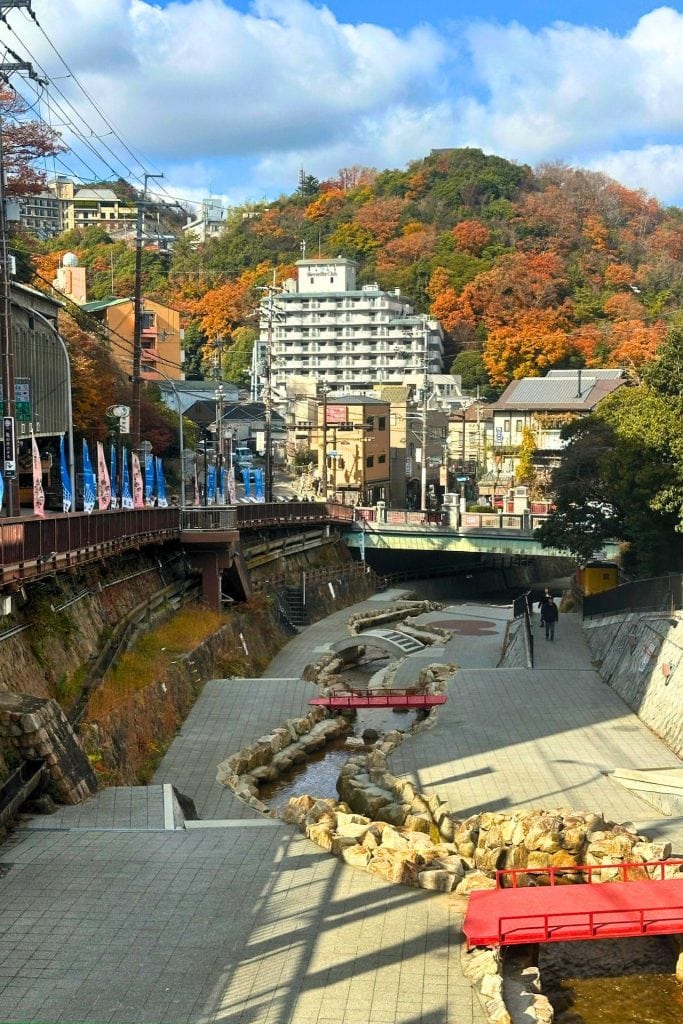

I had a slow and simple day here, and one I’d definitely recommend if you’re craving a low-key escape from the city!
Travel tip: I went to Arima Onsen on a Tuesday, not knowing Kin no Yu closes on the second and fourth Tuesday of each month so I ended up soaking at Gin no Yu nstead.
Still a good soak, but not the one I originally had in mind.
If there’s a place you’re really keen on visiting, it’s always a good idea to double-check the opening days and hours ahead of time.
Also, if you’re planning to visit a public onsen like Gin no Yu, bring your own towel to save a bit of cash. I didn’t, and had to buy one for ¥550 (about $4) from a vending machine.
- Hiroshima
I did a day trip from Osaka to Hiroshima too previously, and it’s one I’d still recommend if you have a JR Pass (or buy the individual shinkansen tickets) and want to explore something more meaningful beyond the usual tourist spots.
From Shin-Osaka Station, it takes about 2 hours by shinkansen to reach Hiroshima, making it an easy full-day trip.
Travelers can start with the Hiroshima Peace Memorial Museum and walk through Peace Memorial Park, where you’ll find moving landmarks like the A-Bomb Dome and Children’s Peace Monument. It’s definitely a powerful experience that offers time to reflect and learn more about Japan’s and WWII history.
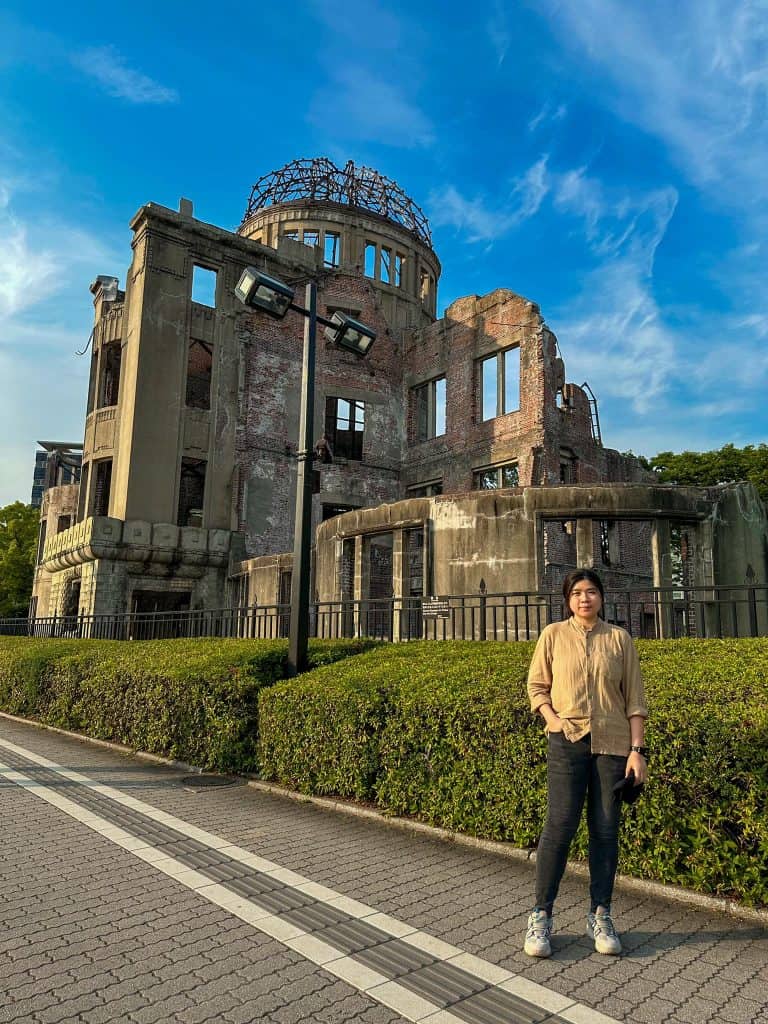

Just a short walk away is Hiroshima Castle, a quiet spot with a reconstructed keep, a moat, and scenic walking paths.
Next you can unwind at Shukkeien Garden, known for its arched bridges and mini landscapes.
And before heading back, don’t miss trying Hiroshima-style okonomiyaki, which layers noodles into the dish and has its own unique flavor compared to the Kansai version.

Travel tip: If you want to include Miyajima or just take your time exploring Hiroshima in your day trip, I’d recommend catching the earliest shinkansen from Osaka. I managed to visit the key spots above, but I definitely felt a bit rushed, especially since I spent a big chunk of time at the Peace Memorial Museum.
- Kobe
Less than 30 minutes from Osaka by train, Kobe makes for a smooth getaway.
You can wander through Nankinmachi Chinatown, try Kobe beef (splurge-worthy if it’s your first time), or ride the ropeway up to the Nunobiki Herb Garden.
For waterside vibes, Harborland and Meriken Park are great spots for a sunset stroll.
And if you’re into sake, the Nada district has historic breweries that offer tastings!
Where I Stayed in Osaka:
If it’s your first time in Osaka, the best areas to stay are usually around Namba, Shinsaibashi, or Umeda. These areas are well connected by subway and close to major attractions like Dotonbori, Osaka Castle, and all the good food.
I stayed at Ark Hotel Osaka Shinsaibashi during this trip and it worked well for my needs. The hotel is a little dated, but the room was clean and had all the basics. Plus, there’s a ramen shop just a few steps away and a convenience store right across the street.
The best part? Dotonbori was just a 10-minute walk, so I could explore the nightlife without being stuck in the bus or train. The location made getting around super easy too, especially since it’s near several train lines.


Other places I considered in Osaka:
If you’re still deciding where to stay, here are a few other hotels that I bookmarked while planning this trip:
- Hotel The Flag Shinsaibashi: Stylish and super central, with consistently great reviews. It’s just a few minutes from Shinsaibashi Station and surrounded by food options.
- Hiyori Hotel Osaka Namba Station: A clean and modern budget pick right next to Namba Station. Ideal if you’re arriving or leaving via Kansai Airport.
- Miyako City Osaka Hommachi: Sleek, mid-range hotel in a quieter part of the city but still convenient for getting around.
Would I change anything?
Honestly, again, not much. Two nights in Osaka (plus a day trip to Arima Onsen) gave me a good mix of iconic sights, fun experiences, and chill time. I’ve been here before, so I wasn’t in a rush but even if it’s your first time, this pacing works well if you’re not trying to tick off the usual Osaka bucket list ideas.
That said, if you’re a foodie or want to explore neighborhoods like Namba, Amerikamura, or Shinsekai more deeply, adding an extra night wouldn’t hurt.
And if USJ wasn’t on my itinerary, I’d probably have used that day to revisit Hiroshima or check out somewhere new like Kobe!
Days 13–14: Kanazawa
Kanazawa is one of the few cities in Japan I don’t mind returning to, and for good reason.
It’s slower than Kyoto but still packed with history, art, and aesthetics, just without the overwhelming crowds.
On my first visit, I had a knee injury from hiking Fushimi Inari Shrine, so I couldn’t explore much. This time, I made up for it.
I gave myself two days in Kanazawa and revisited my favorite spots while also checking off everything I missed: historic samurai quarters, tucked-away shrines, and art spaces that blend old and new Kanazawa beautifully.
And it ended up being one of the fav stops on my 3-week Japan itinerary. If you enjoy walkable cities, traditional culture, and a bit of gold-leaf sparkle, Kanazawa is worth adding to your list.
✅ What I Did in Kanazawa
Kenrokuen Garden
One of Japan’s Three Great Gardens, Kenrokuen was just as stunning as I remembered, even in early winter when the foliage had mostly faded. The staff were setting up yukitsuri when I was there, the signature rope supports that protect the trees from snow.


Travel tip: Kenrokuen Garden has more to see than you might expect, so give yourself at least 2 to 3 hours to explore at a relaxed pace. The best part? Your ticket allows same-day reentry, so if you want to pop out for lunch or take a break, you can return later; just show your ticket at the counter when you come back.
Kanazawa Castle Park
Right next to Kenrokuen, the castle grounds made for a pleasant stroll. I didn’t go inside the buildings since I entered on my previous trip, but I loved the moat views, wooden bridges, and the open space.
Omicho Market
A food lover’s heaven! I wandered the busy aisles of seafood stalls and produce vendors, stopping for a fresh sashimi bowl and sampling seasonal street snacks. It’s a great spot to eat casually and get a feel for the local food culture.

Oyama Shrine & Ishiura Shrine
Oyama Shrine caught my eye with its unusual gate that you don’t typically see at shrines; a mix of Japanese, Chinese, and Western styles. Just down the road, Ishiura Shrine was quieter and hidden away.
Higashi Chaya & Kazue-machi Districts
Higashi Chaya is the more famous geisha district, with old teahouses and gold leaf shops. But Kazue-machi had fewer people and a gorgeous riverside path, ideal for a relaxing afternoon stroll.
Nagamachi Samurai District
This was where Kaga clan samurai and their families used to reside! I walked the narrow alleys lined with earthen walls and small canals, and visited the Nomura Samurai Residence, which had a well-kept garden and artifacts inside. I also dropped by Shinse Memorial Hall, a 450-year-old museum about a Meiji-era reformer.
Myoryuji Temple (Ninja Temple)
I booked a guided tour at Myoryuji, also called the Ninja Temple (even though it has no actual ninja history).
The tour was in Japanese with English explanation sheets, but it was still fun with trap doors, secret staircases, and hidden rooms built into the architecture. With that said, please follow the guide’s instruction and not wander off by yourself.
Travel tip: The tour costs ¥1200 (about $8) and lasts around 45 minutes. You can reserve in advance by phone, or arrive at least 15 minutes before the scheduled tour to grab a spot.
While the tour is conducted in Japanese, explanation sheets are available in several languages, (Spanish, Malay etc) with the English version being the most detailed.


21st Century Museum of Contemporary Art
I didn’t go into the exhibits, but the outer installations and architecture were worth a visit.
Gold Leaf Ice Cream
Tourist-y? A little. Expensive? Kinda. IG-worthy? Definitely. Kanazawa is known for its gold leaf, so it felt fitting to give this treat a go. There were many shops selling this but I bought mine at Hakuichi at Higashi Chaya.
✨ Things I’d Do Next Time (or What You Might Want to Add):
DT Suzuki Museum
A small, serene museum dedicated to Zen philosophy and the life of Suzuki Daisetz, a prominent Buddhist scholar from Kanazawa. It’s designed to be a quiet, meditative space, making it a nice pause from the busier tourist spots.
Tea Ceremony at a Traditional Teahouse
Kanazawa has a strong tea culture, and I’d love to join a proper tea ceremony next time! There are historic teahouses in Higashi Chaya that offer short sessions where you can experience the ritual in an authentic setting.
Kanazawa Yasue Gold Leaf Museum
Since gold leaf is such a big part of Kanazawa’s identity, this museum sounds like an interesting stop to understand how it’s actually made. I’ve read it has interactive displays that show the techniques behind all the shiny things you see around town!
🎟️ Best Kanazawa Tours Built Around Food and Craft
Kanazawa is the kind of place where food and craft really matter, so these are the top experiences I usually recommend when someone asks what is actually worth doing here:
🌙 Kanazawa Night Tour with Local Meal and Drinks
This is an easy way to experience Kanazawa after dark with a proper local meal and drinks, without needing to research where to go at night.
🌀 Kanazawa Art: Long Tradition of Potter’s Wheel Experience
Work directly on the potter’s wheel and learn why Kanazawa ceramics are still relevant today, not just something displayed in museums.
🍣 Kanazawa Sushi & Japanese Cooking Class
Kanazawa is known for its seafood, and this class shows how that translates into sushi and everyday Japanese cooking you can recreate later.
🚴 Kanazawa Half Day E-bike Tour
The e-bike makes it easy to move between districts, markets, and quieter streets without spending the whole day walking.
Best Day Trips from Kanazawa:
If you have an extra day or want to explore a little beyond the city, Kanazawa makes a great base for some rewarding day trips in this Japan 3-week itinerary:
- Kaga Onsen
Just a short 45-minute train ride away from Kanazawa Station, Kaga Onsen is home to four traditional hot spring towns: Yamashiro, Yamanaka, Katayamazu, and Awazu.
Yamanaka Onsen is particularly scenic, with its riverside Kakusenkei Gorge, cozy cafes along Yuge Kaido, and beautifully preserved public bathhouses like Kikunoyu.
It’s an easy, low-effort detour if you’re in the mood for a slow day with some hot spring rejuvenation!

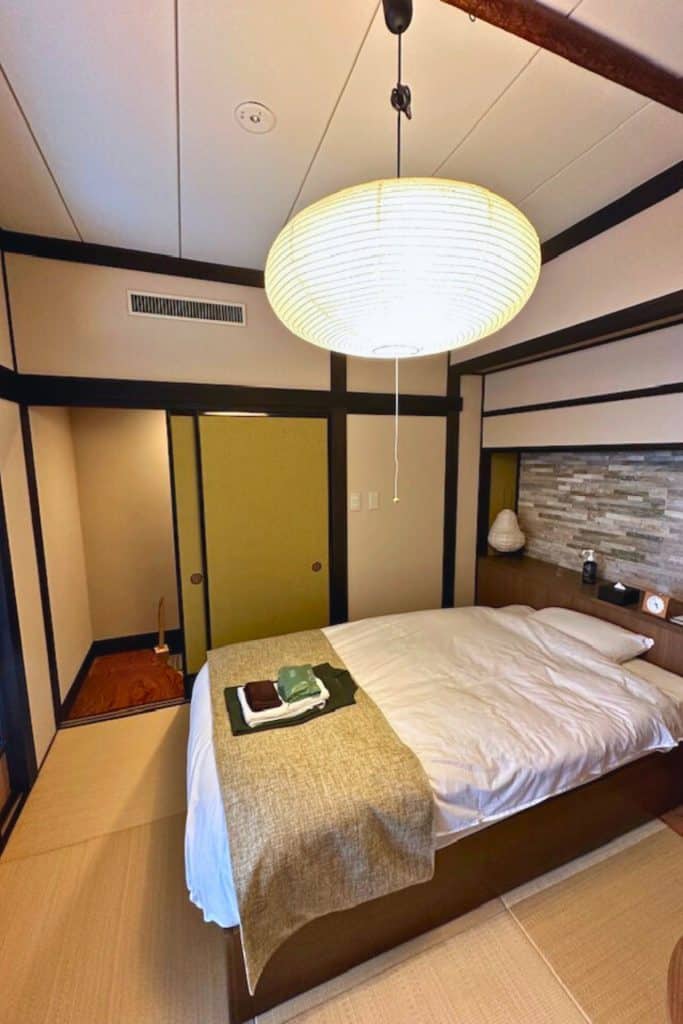
True story: I actually stayed at Hatori in Kaga Onsen on my previous visit to Kanazawa, and looking back, it was one of the biggest travel mistakes I made.
While the onsen town is technically reachable by train, it’s not convenient if you’re trying to explore Kanazawa, especially with only two days to spare. The travel time and logistics just don’t make sense for short stays.
So if you’re keen to soak in an onsen and experience that slower side of Japan, I’d recommend spending two nights in Kanazawa first to fully enjoy the main sights, then adding one night in Kaga Onsen.
- Fukui
Often skipped by tourists, Fukui is actually home to one of the best dinosaur museums in Asia, the Fukui Prefectural Dinosaur Museum!
It’s got everything from fossil exhibits and life-sized models to hands-on learning areas, and it’s a hit whether you’re traveling with kids or just a curious adult.
Not far from the museum is Eiheiji Temple, a serene Zen monastery founded in 1244.
Tucked away in the forest, it’s a peaceful spot with moss-covered stone paths and traditional temple buildings, offering a nice contrast to the buzz of city sightseeing!
Where I Stayed in Kanazawa:
For first-time visitors, staying near Omicho Market is a great choice.
It’s central, walkable to most major sights (like Kenrokuen, Kanazawa Castle, and the Samurai District), and surrounded by plenty of food options.
Buses also run frequently from this area, making it easy to reach the station or head out to less central spots.
I stayed at Hotel Pacific Kanazawa, which was a comfortable and cozy base for a few days. The room was small but had everything I needed, and I really liked the on-site lounge where I could grab a coffee and relax between outings.


Other places I considered in Kanazawa:
If you’re still deciding where to stay in Kanazawa, here are a few other spots I looked into while planning this trip:
- UAN Kanazawa: A stylish mid-range hotel with minimalist design and a calm, modern vibe. It’s centrally located and close to Omicho Market and Kanazawa Castle.
I seriously considered this one and would love to stay here on a future visit!
- Sumiyoshiya: A traditional ryokan with tatami rooms and Japanese breakfast, offering a more classic experience without being overly expensive.
Travel tip: If you want more ryokan options, especially ones with private onsen, check out my best Kanazawa onsen ryokan guide.
Would I change anything?
No, I think two days in Kanazawa was just right.
I liked the slower pace after busy cities like Kyoto and Osaka, and the city’s compact layout made it easy to explore on foot. It was also nice to have a mix of traditional culture, historic districts, and quieter spots like shrines and museums without fighting crowds.
If anything, I wouldn’t try to squeeze in day trips and sightseeing in the city unless you’re staying three nights.

Days 15–16: Takayama
Takayama is one of those Japanese towns that feels like stepping into a slower, more traditional pace of life.
And for first-time visitors, it’s still absolutely worth a stop.
That said, it’s grown noticeably more popular since my last visit. With direct buses from Kanazawa, Takayama, especially the Old Town area, now sees a steady stream of day-trippers.
It’s still walkable and welcoming, just not quite as under-the-radar as it once was.
✅ What I Did in Takayama:
Takayama Old Town
Lined with preserved merchant houses, sake breweries, and craft shops, the Old Town is a beautiful place to wander, especially early in the day before the crowds arrive. There are plenty of spots here to try local snacks too, including Hida beef sushi, beef bun, and dango.
Travel tip: I found a sake shop offering tastings for just ¥200 (about $2), which was a fun way to sample a few types without committing to a full pour.


Miyagawa Morning Market
Located along the riverside, this daily market had stalls selling everything from fresh fruit to handmade dumplings and flowers. It’s a great place to chat with local vendors and grab snacks for a late breakfast!
Higashiyama Walking Course
This trail was the real highlight for me! It’s a series of connected paths that weave up through the hills behind the old town, taking you past small temples, quiet shrines, and even some cemeteries with graves of notable local figures. The route feels peaceful and a bit off the usual tourist track, and it’s a great way to see a different side of Takayama beyond the busy streets.
Travel tip: There are quite a few staircases and uneven paths along the way, so it’s best to wear comfortable walking shoes and travel light.
Hida Folk Village (Hida no Sato)
An open-air museum of thatched-roof farmhouses relocated from around the region. It’s a quieter (and cheaper) alternative to Shirakawa-go if you want to see gassho-style architecture up close.
Sakurayama Hachimangu Shrine & Takayama Festival Float Exhibition Hall
Even if you’re not visiting during the famous Takayama spring or autumn festivals, you can still see the elaborate floats at Yatai Kaikan. These ornate, gold-trimmed floats are beautiful and full of craftsmanship, and the museum provides pretty good English descriptions!


Takayama Jinya
A preserved Edo-period government office with original rooms and artifacts. It’s not flashy, but it offers a glimpse into historical life and administrative roles in old Japan.
Tried Local Ramen
Takayama has its own ramen style; light soy sauce broth, thin curly noodles, and simple toppings like green onion and pork. It’s not heavy or creamy like tonkotsu, which I found really comforting on a cold night!
✨ Things I’d Do Next Time (or What You Might Want to Add):
Shiroyama Park
A quiet, wooded area built on the ruins of Takayama Castle. It’s just past the Higashiyama course and offers forest paths and a tranquil place to take a break.
Kusakabe Folk Museum
A beautifully preserved former merchant house showcasing how upper-class families once lived!
Takayama Showa Museum
A quirky throwback to mid-20th century Japan with old-school toys, recreated shops, and retro electronics. Definitely a fun, nostalgic change of pace from temples and shrines.
🎟️ Takayama Experiences I Would Personally Recommend
Takayama is small and easy to explore, so these are the experiences I would suggest if you want something more hands on without overcomplicating the day.
🥷 Ninja Experience in Takayama
This is light hearted and fun, especially if you want a break from sightseeing, and it gives some context to ninja history without taking itself too seriously.
🍱 Takayama Japanese Cooking Class with Local Family
Cooking in a local home adds a personal layer to the trip and gives a glimpse into everyday life that you do not get from restaurants alone.
🍙 Takayama Rice Ball and Miso Soup Making at Temple
Simple food, calm setting, and a slower pace that suits Takayama perfectly, especially if you want something meaningful but low key.
Best Day Trips from Takayama:
Takayama makes a great base for exploring some of central Japan’s most scenic small towns and rural landscapes without needing to change hotels.
Here are some best Takayama day trip ideas:
- Shirakawago
This was the only day trip I actually did, and I’d still recommend it (especially in winter) despite it becoming more popular over the years!
Located about a 50-minute bus ride away, Shirakawa-go is a UNESCO World Heritage Site known for its traditional gassho-zukuri farmhouses with steep thatched roofs built to withstand heavy snowfall.
The main village, Ogimachi, is easy to explore on foot. You can visit the Wada House to see the interior of a preserved home, stroll the scenic paths, and hike up to the Ogimachi Castle Observation Deck for a sweeping panorama of the village.
I actually didn’t expect it to snow during my visit, so seeing it with my own eyes was a real highlight. The snow-dusted rooftops, bare white-laced trees, and misty skies felt almost eerie but surreal in the best way!


Travel tip: Nohi Bus runs many departures daily between Takayama and Shirakawa-go, and you can reserve seats in advance either online or at the terminal.
I wasn’t able to get a reserved seat, so I ended up queuing for one of the open-seat buses instead (but you’re not me, because you can buy the ticket online and skip the queue 😂) .
While not ideal, it worked out fine; just make sure to arrive early, especially during peak times. The staff usually suggest arriving about 10 minutes before departure, but I’d recommend being there at least 20 minutes earlier to be safe.
I also double-checked with the counter staff, and they confirmed that return buses from Shirakawa-go do keep running even after the listed times.

The only downside is that there’s no fixed schedule for these extra buses, so you might need to wait around a bit until the next one is dispatched. You can confirm with them again once you’re there!
Alternatively, you can join a day trip bus tour like this, where transport is included and you get to visit both Shirakawa go and the quieter village of Ainokura without the hassle.
- Hida Furukawa
Just 15 minutes by train from Takayama, Hida Furukawa offers a quieter, less touristy vibe with beautiful canals, white-walled storehouses, and koi carp. It’s especially picturesque in spring and early autumn.
You can wander along Shirakabe Dozogai Street, explore shops, or pop into Watanabe Sake Brewery for a quick tasting. If you’re curious about regional festivals, the Furukawa Festival Exhibition Hall showcases ornate floats and behind-the-scenes details of this lesser-known celebration.
Where I Stayed in Takayama:
After two trips to Takayama, I’ve found that staying near Takayama Station is the most convenient.
It’s an easy walk to the old town and attractions, and being close to buses and trains simplifies day trips or winter or rainy travel when hauling luggage gets tricky.
Below are the two hotels I stayed in Takayma:
- KOKO HOTEL Hidatakayama (recent trip)
- Modern, compact, and well-equipped. The public bath was a bonus after a long day walking, and the breakfast buffet had both Japanese and Western options. It’s about a 10-minute walk from the station. It was still okay for me, but maybe not ideal if you’re arriving late or have heavy luggage.
- Country Hotel Takayama (previous trip)
- Right across from the station and bus terminal, which made arrivals and departures super easy. The room was basic but clean, and there’s a Family Mart downstairs so you can just go down and get your late-night snacks!
My personal opinion: Unless you’re staying somewhere fancy with a free bus shuttle, I recommend picking a hotel near the station. It saves time, energy, and your back, especially in winter.


Other places I considered in Takayama:
If you’re still deciding where to stay in Takayama, here are two best other options I looked into that’s near to the Takayama Station while planning this trip:
- Mercure Hida Takayama: A mid-range hotel with modern rooms, a rooftop bath, and an in-house restaurant. Stylish and well-located, especially if you want comfort without splurging.
- Oyado Koto No Yume: A colorful ryokan just minutes from the station, with traditional rooms, optional private onsen, and a warm, welcoming vibe.
If you want more ryokan options, especially ones with private onsen, check out my best Takayama onsen ryokan guide.
Would I Change Anything?
For a first-time visit, I think two days in Takayama is just right. It gives you enough time to explore the Old Town, visit Hida no Sato, and see the main attractions at a slower pace.
But if you’re hoping to squeeze in a day trip like Shirakawago or Hida Furukawa, you’ll need to either add a third night or shuffle things around. One option is to skip places like Hida no Sato or the Higashiyama Walking Course and use your second day for the side trip instead.
Week 3 – Hirayu Onsen, Matsumoto & Tokyo Return
For the last leg of the trip, I continued soaking in the quiet mountain scenery at Hirayu Onsen, before slowly transitioning to a castle town in Matsumoto and eventually making my way back to Tokyo.
This part of the itinerary was intentionally slower. After two weeks of city-hopping and sightseeing, I wanted some no-rush, less planning me-time.
Days 17–18: Hirayu Onsen
Nestled in the Northern Japanese Alps, Hirayu Onsen offers a slower, more rustic hot spring experience than places like Hakone or Gero.
The first time I passed through Hirayu was on a summer bus ride from Takayama to Tokyo during my first solo trip.
I still remember staring out the window, completely awed by the mountain views. It made such an impression that I promised myself I’d come back one day.
And this time, I did. 🥹
I spent two days here on this 3-week itinerary, and it turned out to be one of the most laid-back parts of the whole trip.
✅ What I Did in Hirayu Onsen:
Wandered Around Hirayu Onsen Town (with a few seasonal hiccups)
Since I visited in winter, the town was covered in beautiful snow but that also meant some things were closed or harder to access.
I couldn’t get to the public open-air bath at Hirayu-no-Yu or use the footbath (it was snowed in), and the trail to Hirayu Shrine was blocked partway.
Still, I loved walking through the quiet streets and admiring the snowy scenery, even if I had to shuffle carefully to avoid slipping!


Stopped by the Tourist Information Center
This place was actually more interesting than I expected. Inside, there are videos playing about the region, the history of Hirayu Onsen, and the wildlife you can spot in the area, like Japanese serows and rock ptarmigan.
There are also displays about the Northern Alps and seasonal activities, so it’s a nice warm stop if the weather is bad (or if everything else is snowed in like it was for me).
Shinhotaka Ropeway
Despite low visibility from heavy snow, this was one of my favorite winter memories!
To get there, you take two ropeways: first, a short ride to Nabedaira Kogen Station, then transfer to Japan’s only double-decker gondola, which climbs steeply up the side of the mountain.
The seemingly endless frames of snow-coated pine trees as we rode up the ropeway were so captivating, it honestly felt surreal.
At the top, I stomped through snow trails, threw snow in the air, took blurry photos with my frozen fingers, and just fully soaked in the moment!


There are also a couple of cafes if you want to warm up with a coffee or light snack.
Travel tip: I bought a combo ticket (bus + ropeway) for ¥5200 (~$34) from the counter at Hirayu Bus Terminal, which was cheaper than paying separately. Also, in winter, the ropeway sometimes suspends service due to bad weather. The official website has a live cam, but it wasn’t working when I checked, so it’s safest to confirm with the counter staff before buying the ticket.
Soaked in the Ryokan’s Onsen Baths
Of course, onsen time was a must in Hirayu Onsen (it’s an onsen town!) and it’s legit one of the best parts of this stop!
I stayed at Tsuyukusa, a ryokan with both indoor and outdoor baths, and soaking outside while surrounded by snowy mountains was pure magic. The water here is rich in minerals and known for helping with fatigue, which was perfect after a week of walking-heavy days (I’m talking about you, Kyoto 🤭).
Dinner at Ramen Bar Yadorigi
I had dinner at Ramen Bar Yadorigi and it was so good! I ordered ramen and a side of cold tofu, and it was the perfect comforting meal after being out in the cold all day.
The town doesn’t have many restaurants, so I was glad to find a cozy spot nearby.
Travel tip: There’s no typical convenience store (like 7-Eleven or Lawson) in Hirayu Onsen, so it’s a good idea to bring any essentials or snacks with you beforehand, especially if you’re arriving late.
There’s a souvenir shop inside the bus terminal with basic food, and a small store across from Tsuyukusa that stays open a bit later. But options are limited and close early, this town is definitely not the place for late-night food runs.
There are a few Japanese restaurants, cozy cafes, and izakaya in town, but most close by 9 pm.
✨ Things I’d Do Next Time (or What You Might Want to Add):
Hirayu no Mori Onsen Baths
One of the most popular public baths in the area, with multiple outdoor rotenburo surrounded by forest. I skipped it this time to take it slow at my ryokan, but it’s high on my list for the next visit.
Hirayu Otaki Waterfall
One of the tallest waterfalls in Gifu Prefecture (over 60 m high!), Hirayu Otaki looks beautiful in every season particularly in winter, when the water partially freezes and creates stunning icy formations.
I didn’t make it all the way during my stay because of the snow buildup, but it’s definitely worth checking out if conditions allow!
Nature Walks in Warmer Seasons
In spring or autumn, Hirayu has several forest trails and scenic walks that would be perfect for light hikes or exploring more of the mountains.
Where I Stayed in Hirayu Onsen:
Most accommodations here are small ryokans or guesthouses with their own onsen baths, so even staying in can feel like an experience.
In winter, it means slipping into steaming water while everything outside is covered in snow. In summer, it’s a cool, quiet escape with fresh mountain air.
I stayed at Tsuyukusa, a simple but cozy ryokan just a short walk from the bus terminal. They had both indoor and outdoor baths, and soaking in the open-air one with snow falling around me was such a relaxing way to end the day.


The host and staff were helpful, the room was a traditional tatami style, and they even offered free bread, coffee, and green tea for guests.
Just a small note: there’s no lift, so I carried my luggage up the stairs myself. So it’s something worth knowing in advance.
Other places I considered in Hirayu Onsen:
Here are a couple of better options I bookmarked for a future trip (a bit over my usual solo travel budget, but ideal for visiting with friends or family):
- Hirayu no Mori: One of the most well-known stays in the area, with multiple outdoor baths surrounded by trees. Open to day-use visitors too, but staying overnight gives you access to more of the facilities and a quieter experience.
- Mozumo: A more upscale, secluded ryokan where each room has its own private open-air bath. It’s a splurge, but perfect if you want privacy or are celebrating something special.
Would I Change Anything?
Nothing! The snow was honestly a bonus. I didn’t expect it to fall in mid-December, since most travel sites say Japan’s snow season starts around late December. So I guess it really depends on the region.
That said, visiting in winter meant some places were closed or harder to access, like the public footbaths, the open-air bathhouse, and the trail to Hirayu Otaki.
I’d also love to come back in summer and take my time soaking in the green, peaceful scenery.
Hirayu Onsen is also a common gateway for people heading into Kamikochi, so that’s something I’d probably add next time too!
But even with the weather hiccups, I loved my time here. It was peaceful, scenic, and a perfect way to wind down before heading into the final stretch of the trip.


Days 19–20: Matsumoto
So I’ve always wanted to visit one of Japan’s original castles and finally made it happen on this trip!
The closest I’d come before was a short 15-second view of Himeji Castle from my Shinkansen window, speeding between Osaka and Hiroshima. 😅
I’d known for a while that Matsumoto had one too, and realizing how easily it connects from both Hirayu Onsen and Tokyo sealed the deal.
I spent two days here, and honestly, I would gladly come back just for the vibes and explore more of this underrated city.
✅ What I Did in Matsumoto:
Visited Matsumoto Castle
This was the main reason I added Matsumoto to my itinerary; one of only 12 original castles left in Japan! Walking up to it was awe‑inspiring, and climbing the steep wooden stairs inside felt like stepping back in time. From the top, there are beautiful views of the city and surrounding mountains. Definitely a worthy National Treasure!
Travel tip: If you want to learn more about the castle’s history and architecture, sign up for the free guide service at the castle park entrance. I opted for one and learned a lot from Ms. Kawa, which made the visit extra memorable.
Matsumoto City Museum
A newly reopened museum that gives a broader look at the city’s cultural background from local festivals and traditional crafts to daily life in the region. The exhibits are compact but nicely done, and it was a good complement to the castle without feeling overwhelming.
Strolled Nawate Street (Frog Street)
This short street beside the river has a quirky frog theme and is full of little souvenir shops, local snacks, and cozy cafes.


Yohashira Shrine
Tucked at one end of Nawate Street, this small shrine was uncrowded and I hung out for awhile enjoying the peaceful atmosphere. It’s said to be good for making wishes come true since it enshrines four deities instead of one!
Nakamachi Street & Matsumoto Scale Museum
Nakamachi Street is lined with well-preserved white kura storehouses turned into boutiques, galleries, and cafes. I wandered the area and popped into the Matsumoto Scale Museum; a small but interesting museum showcasing vintage weighing tools once used by local merchants.
✨ Things I’d Do Next Time (or What You Might Want to Add):
Matsumoto Art Museum
If you’re into art (especially Yayoi Kusama), this is a must‑see. I skipped it this time as I was rushing for my bus to Tokyo, but it’s definitely on my list for my next visit, especially since Kusama was born in Matsumoto!
Daio Wasabi Farm (Azumino)
This is a little further out, but it’s one of the largest wasabi farms in Japan. You can walk around the clear water streams and try wasabi ice cream or wasabi soba!
Ukiyo‑e Museum
For fans of Japanese art, the Japan Ukiyo‑e Museum has one of the biggest private collections of woodblock prints. It’s a great option if the weather isn’t great or if you’re looking for an interesting indoor activity.
Sake Brewery Tours & Tastings
Matsumoto and the surrounding Nagano region are known for sake, and a few local breweries offer tours or tastings if you want to explore local flavors.
Best Day Trips from Matsumoto:
If you plan to stay for several nights in Matsumoto, here are the three best day‑trip ideas:
- Narai‑juku (Historic Nakasendo Post Town)
I did a day-trip to Narai-juku, one of the best-preserved post towns along the old Nakasendo Trail.
Just about an hour from Matsumoto by train, this was once a key stop for travelers between Edo (Tokyo) and Kyoto. And today, its main street stretches for around 1 km of beautifully preserved Edo-period architecture and quiet vibes.
I strolled the long main street lined with wooden houses, crossed the Kiso no Ohashi bridge at the edge of town, and visited the Nakamura Residence, a former merchant house that once sold lacquered combs, now turned into a small museum.
I also stopped at Sennen-ji Temple, known for the two large “groaning stones” out front, before moving on to see the 200 Jizo Bodhisattvas, rows of mossy stone statues placed along a forested path.
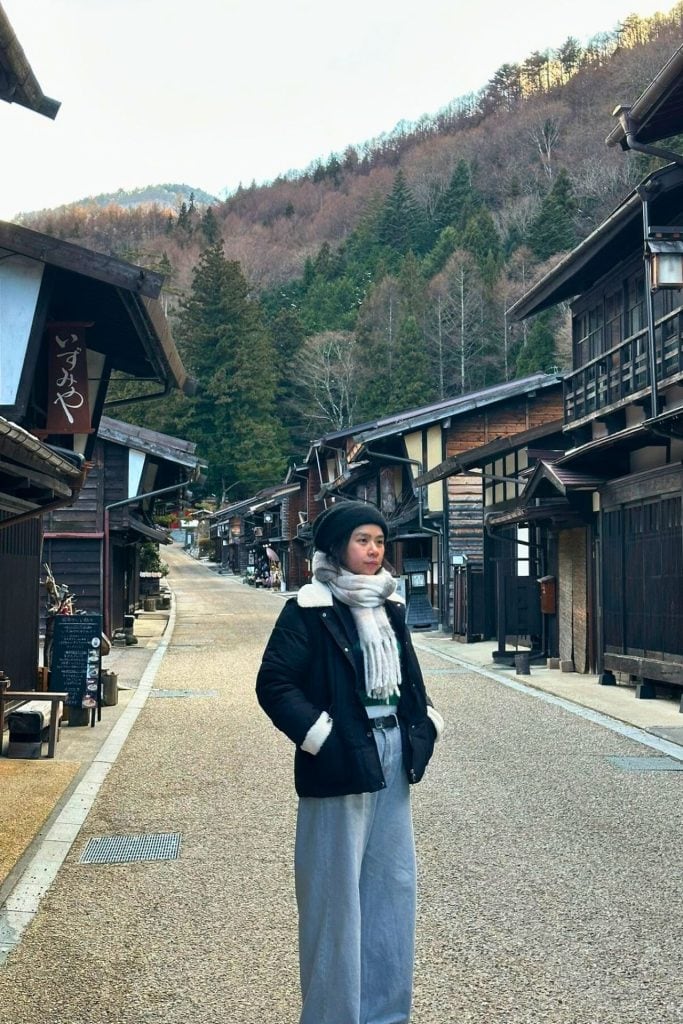

Compared to Tokyo, the contrast was huge; I probably saw fewer than 30 people the whole time. At most sites, it felt like I had the town to myself. A little eerie, but also really interesting.
- Kiso‑Hirasawa (Lacquerware Village & Crafts)
Just beyond Narai (or easily connected by local transport or short taxi/bus), Kiso‑Hirasawa is a small village known for its traditional lacquerware artisans. Many craftspeople still hand‑make lacquer items, and shops invite visitors to browse or even try their hand at painting small pieces.
- Magome & Tsumago (Other Historic Post Towns on the Nakasendo)
If you’re up for a longer day with a mix of walking and scenery, consider a trip to Magome and Tsumago, two other beautifully preserved towns along the old Nakasendo Trail.
While they are outside Nagano Prefecture, they can be reached as a day adventure from Matsumoto by train and are famous for the Magome‑Tsumago walking trail, a scenic 7 km path through countryside and forest.
Travel tip: The best time to walk the Magome to Tsumago section is spring (April to early June) and autumn (late September to November), when the weather is mild and the scenery is at its best.
Summer can be hot and humid with more bugs, while winter brings snow and icy paths, making parts of the trail slippery or closed.
So if you’re aiming for comfort and good views, it’s best to avoid the peak of summer and deep winter.
Where I Stayed in Matsumoto:
The most convenient area to stay is near Matsumoto Station, especially if you have day trips planned or are heading back to Tokyo. It’s about a 15‑minute walk from the station to major city sights like Matsumoto Castle and Nakamachi Street.
Alternatively, staying closer to Nakamachi or the castle area places you in the historic heart of town, with charming old buildings and cozy cafe options within easy strolling distance.
I stayed at Ace Inn Matsumoto, which is right across from the bus terminal. The hotel isn’t the newest, but the rooms were cozy, the staff friendly, and the free breakfast buffet was a nice bonus. They also offered luggage storage, so after checkout, I just wheeled my suitcases across the road to catch the highway bus to Shinjuku.


One thing I found out too late was that the hotel offers complimentary shuttle service and access to the open-air hot springs at Utsukushigahara Onsen Shoho, a five-star ryokan in the same hotel group.
The staff didn’t mention this during check-in, so if you’re staying here, it’s definitely worth asking about!
Other places I considered in Matsumoto:
If you’re still deciding where to stay, here are a few options I looked into while planning this trip:
- TABINO HOTEL Lit Matsumoto: A stylish mid-range hotel just a short walk from Matsumoto Bus Terminal, offering modern rooms, great amenities, and consistently high guest ratings.
- Matsumoto Marunouchi Hotel: A boutique hotel located closer to the castle and Nakamachi area, so it’s perfect if you want to stay in the historic district.
- Oiwakeya Ryokan: A relaxed, tourist-friendly ryokan a short stroll from Matsumoto Castle, with tatami floors and a cozy local vibe.
Would I Change Anything?
If I could do it all over again, I think I’d stay three nights instead of two. One of my Japan to-do goals is to hike the Nakasendo Trail, so walking the Magome to Tsumago route and staying overnight in Tsumago would’ve made the experience feel more complete.
Alternatively, you could use the extra day to add Nagano to your itinerary, which is another underrated city in the Chubu region that deserves more love.
Also, I’d definitely book a later bus back to Tokyo. Knowing myself, I take my time at each spot instead of rushing through a checklist, so having that extra buffer would’ve made the final day feel less hectic.
I took my sweet time soaking in Matsumoto Castle… and ended up sprinting to the bus terminal with just five minutes to spare 😅
If it’s your first time, just know that Matsumoto has more to offer than it looks. It’s worth giving yourself a little breathing room here (and having a less panicky trip like I did)!

Day 21-22: Back to Tokyo
After weeks of city hopping, it was finally time to loop back to Tokyo.
For the last two nights ,I stayed near Shinjuku, specifically Shin-Okubo, so it’d be easier to reach the Shinjuku Expressway Bus Terminal and catch the airport limousine bus to Haneda Airport.
Once I checked in, I spent the evening wandering Shin-Okubo’s lively streets, browsed a few shops, and ended the night people-watching at the Starbucks near the station.


The next day I explored Shimokitazawa, a chilled-out neighborhood filled with thrift shops, local cafes, and interesting murals.
I had a hearty brunch at Sunday Brunch, did some last-minute shopping and souvenir hunting, and soaked in the youthful vibes of the neighborhood. Later, I stopped by Mardi Gras for a cozy tea break with hot tea and fruitcake. I also grabbed some snacks at Don Quijote here, which way less crowded than the Shinjuku branch.
Personal observation: The people here were seriously stylish. Almost everyone looked like they stepped out of a Japanese fashion magazine! 😱


If it’s your first time, these final two days in Tokyo are a great buffer to wind down after a full itinerary.
You can revisit spots you missed during your first few days, catch up on last-minute shopping, or just slow down and enjoy the city at your own pace.
Alternatively, you coulduse this time for a day trip to nearby towns like Kawagoe (Little Edo vibes with retro streets), Enoshima (beachy with a coastal feel), or even Nikko if you don’t mind an early start.
FAQs: How to Plan A Trip to Japan for 3 weeks
How to Get Around Japan
Getting around Japan for 3 weeks might seem overwhelming at first, but once you understand the main options and plan your route, it’s actually pretty smooth and most likely, you don’t need a JR Pass to make it work.
So, Do You Really Need a JR Pass?
Short answer: It depends on your travel style and itinerary.
With recent price increases, the JR Pass only makes sense if you’re hopping on multiple long‑distance shinkansen in a short timeframe, like a fast Golden Route loop in 7 to 10 days.
In my case, I didn’t get the pass and still covered Tokyo, Kyoto, Kansai, the Japanese Alps, and back to Tokyo just fine using a mix of buses and local trains.
How I Got Between and Within Cities (No JR Pass)
Here’s how I actually travelled during my 3‑week Japan trip:
- Tokyo → Mount Fuji (Kawaguchiko): Highway bus
- Mount Fuji → Kyoto: Highway bus (overnight)
- Kyoto → Uji: Local train
- Kyoto → Osaka: Local train
- Osaka → Arima Onsen: Osaka Arima Onsen Liner
- Osaka → Kanazawa: Highway bus (overnight)
- Kanazawa → Takayama: Nohi Bus
- Takayama → Shirakawago: Nohi Bus
- Takayama → Hirayu Onsen: Nohi Bus
- Hirayu Onsen → Shinhotake Ropeway: Nohi Bus + ropeway
- Hirayu Onsen → Matsumoto: Alpico Bus
- Matsumoto → Narai-juku: Local trains
- Matsumoto → Tokyo (Shinjuku): Alpico Bus
For long distances, I mostly booked highway buses online, including overnight buses. They’re slower than the shinkansen, but they save money and a night’s accommodation while letting you see scenery you’d miss on the train.
Travel tip: For popular routes (especially buses to Mt Fuji, Arima Onsen, Kanazawa–Takayama, Shirakawago), book early once your travel dates are confirmed. Seats can fill up quickly especially during peak seasons.
For city travel, I used a Suica IC card; just tap in/tap out for subways, local trains, buses, and even vending machines.

Some cities also offer city passes that might save you time and money, depending on your plans:
Here are a few I came across during my trip:
- Tokyo
I bought the Tokyo Subway Pass, which in my opinion was totally worth it since I was moving around a lot and visiting multiple neighborhoods in a short time.
- Mount Fuji (Lake Kawaguchiko)
You can get a 1- or 2-day sightseeing bus pass from Kawaguchiko Station, which covers most of the nearby popular stops, as well as further spots like Lake Yamanaka and Ice Cave.
Since I prefer a bit more flexibility and freedom, I rented a bike and cycled part of Lake Kawaguchiko instead, stopping at scenic viewpoints and nearby attractions along the way.

- Osaka
I didn’t get the Osaka Amazing Pass for this trip because I wasn’t moving around that much.
But if you’re trying to tick off a bunch of attractions in your bucket list within one or two days, then the Osaka Amazing Pass is worth considering.
The Osaka Amazing Pass gives you unlimited rides on subways and buses plus free entry to around 40 major attractions, including spots like Umeda Sky Building, Osaka Castle, river cruises, and several museums, making it great value if you plan to sightsee intensively for one or two days.
- Kanazawa
Kanazawa also has a One-Day Free Ride Pass for the Loop Bus that connects the main attractions from the station.
Personally, I walked around since the sights are relatively close, but if you’re visiting on a day trip from Takayama, this bus pass can help you make the most of your time!
Luggage Forwarding Service: What I Did + What to Know
To make my life easier (thanks to what my previous trip taught me), I brought two pieces of luggage for this winter trip: one large suitcase and one smaller carry-on-sized one.

The small one held 2 to 3 days’ worth of clothes, which meant I didn’t have to drag the big one through every city hop.
It honestly made moving around so much less stressful and tiring, especially when taking public transportation!
And for this itinerary, I only used the luggage forwarding service twice (total $32):
- Tokyo → Kyoto
- Kyoto → Takayama
Originally, I planned to forward my big bag from Takayama to Matsumoto too. But after checking with the Nohi and Alpico bus counter staff, they confirmed that I could bring both pieces with me, so I kept my luggage with me from Takayama until the end of the trip.
Also, for the last few stops of this itinerary (Hirayu Onsen, Matsumoto, and Tokyo), I stayed within walking distance of the train or bus terminals, which made hauling luggage way easier.
Travel tip: While most long-distance buses say they only allow one piece of checked luggage (under 10kg), it’s ultimately up to the driver’s discretion. I’ve seen people bring two without issue, but it’s always safer to double-check at the terminal.
Most accommodations in Japan will help you fill out the Yamato Transport form (or similar service) and even estimate the delivery date. It usually costs around ¥2000 to ¥3000 ($12 to $20) depending on distance and bag size.

Also, if you’re sending your luggage to a smaller guesthouse or ryokan, make sure your name on the tag matches your booking name exactly and write your check-in date. This will help to avoid any mix-up when they receive it.
Another tip to know is luggage forwarding isn’t same-day. You usually need to send it at least one day in advance, sometimes two, depending on the distance and region.
For example, for the Tokyo to Kyoto route, you’ll need to send it two days ahead to ensure it arrives on time.
My Japan 3 Week Trip Cost
Honestly, a trip to Japan can do real damage to your bank account.
But with a bit of planning, you can explore several cities, immersing in the local culture, trying out local food, and enjoy the scenery along the way without burning a hole in your wallet.
For this trip, I didn’t backpack or pinch every penny, but I also didn’t go full luxury either. I wanted to be comfortable, eat everything, and experience Japan in a way that felt rich without being overspending.
And I’m happy to say that I pulled it off.
Total spent over 3 weeks in Japan: ~ $3150 USD
That’s everything; from flights, accommodation, trains, food, experiences, and a few souvenirs I couldn’t resist!
| Category | Cost (USD) |
| Flights (ANA – Roundtrips) | $950 |
| Accommodations | $780 |
| Food & Drinks | $510 |
| Transportation | $335 |
| Attractions/Tours | $355 |
| Shopping/Souvenirs | $100 |
| Miscellaneous | $120 |
| Total | ~ $3150 |


Best Time to Visit Japan
Japan has 4 seasons, offering distinct and unique travel experiences to visitors.
And each season has its pros and cons!
Depending on your travel budget and individual preference, you can refer to the season guide below before planning a trip to Japan:
Spring (March to May)
If you plan to admire the beautiful pink blossoms of cherry trees while exploring Japan, you will need to visit the country in the spring season.
However, Japan’s travel in this season is also the busiest and the most expensive month to be.
Most of the accommodations will be fully booked and some popular hanami spots will be overcrowded with local and international tourists too.
Summer (June to August)
Summer in Japan is hot and humid, not to forget it is a rainy season too.
Typhoons are also prevalent in the summer.
If you prefer to visit the major attractions with lesser crowds, you can consider travelling to Japan in the summer.

Autumn (September to November)
Another stunning and peak season to visit Japan is during the autumn—to watch the mesmerising fall foliage with the bright red, orangey maple leaves view spanning across the street or park.

The scenery is absolutely stunning but that also means the popular fall foliage spots can get pretty crowded, particularly in places like Tokyo, Kyoto, and Nikko.
So to avoid stress or change of plan, book your hotels and any must-do tickets (like temples with limited-entry night viewings) as early as possible, ideally 2 to 3 months in advance.
If you can, try visiting major sights on weekdays and start early in the morning before the crowds arrive. Trust me, it makes a big difference!
Winter (December to February)
Winter is the least touristy season in Japan due to its low temperature and cold weather.
Accommodation is also the cheapest in winter and you get to visit the major attraction places without large crowds.
I actually recommend visiting in early winter; you’ll get to enjoy snowy scenery in places like Hirayu Onsen and Shirakawago, without the harsh cold you’d get in deep winter (unless you’re heading to Hokkaido!). It’s also generally less crowded than fall or spring, which makes sightseeing feel more relaxed.

Final Thoughts: Is This the Best 3-Week Japan Itinerary for First-Timers?
I wouldn’t say this is the perfect 3-week Japan itinerary for everyone but it was the right one for me.
It covered the classic Golden Route (Tokyo, Kyoto, Osaka), but I also made time for smaller towns, mountain scenery, and slower moments which really matched my travel style.
Could I have crammed more cities? Of course.
But I also wanted some free-and-easy moments where I could just wander, have an extra coffee, or sit quietly watching the snow fall in Hirayu Onsen.
So if you’re planning your first Japan trip and want something that blends iconic highlights and more local, lesser-known gems, I hope this itinerary gives you ideas, inspiration, and a realistic picture of how it all comes together.
And remember: Japan has a way of drawing you back. So whatever you don’t get to this time, you’ll likely find yourself dreaming about on your next trip!
✨ Need Help Planning Just Part of Your Japan Trip?
Japan can be overwhelming, especially in cities like Tokyo, Osaka, and Kyoto with hundreds of options and hidden gems.
If you’re short on time or want help planning just a few perfect days, I offer a custom 3-day itinerary planning service tailored to your interests, travel style, and pace so you can:
✅ Save time
✅ Avoid planning fatigue
✅ Just focus on the fun stuff

Sam Lee, founder of Sam Lee Travel, is a seasoned traveler with over 10 years of experience exploring Asia. Growing up in multiracial Malaysia and later living in Singapore, Sam has developed a deep understanding of the culture, customs, and attractions in the region.
With a love for outdoor adventures and water sports, Sam helps over 25K readers each month plan Asia trips, including off the beaten path destinations and sharing practical travel tips and real, unfiltered experiences!